

Chattanooga has a habit of making believers out of skeptics. The city on the Tennessee River keeps producing the kind of numbers, amenities and reinventions that suggest it should be a household travel name, yet for many Americans it remains more detour than destination.
That disconnect is now one of the most interesting stories in Southern travel: a mid-sized Tennessee city attracting millions of visitors, tech investment and national attention, while still living in the shadow of Nashville, Gatlinburg and other better-marketed stops.
A city with momentum that still feels underestimated
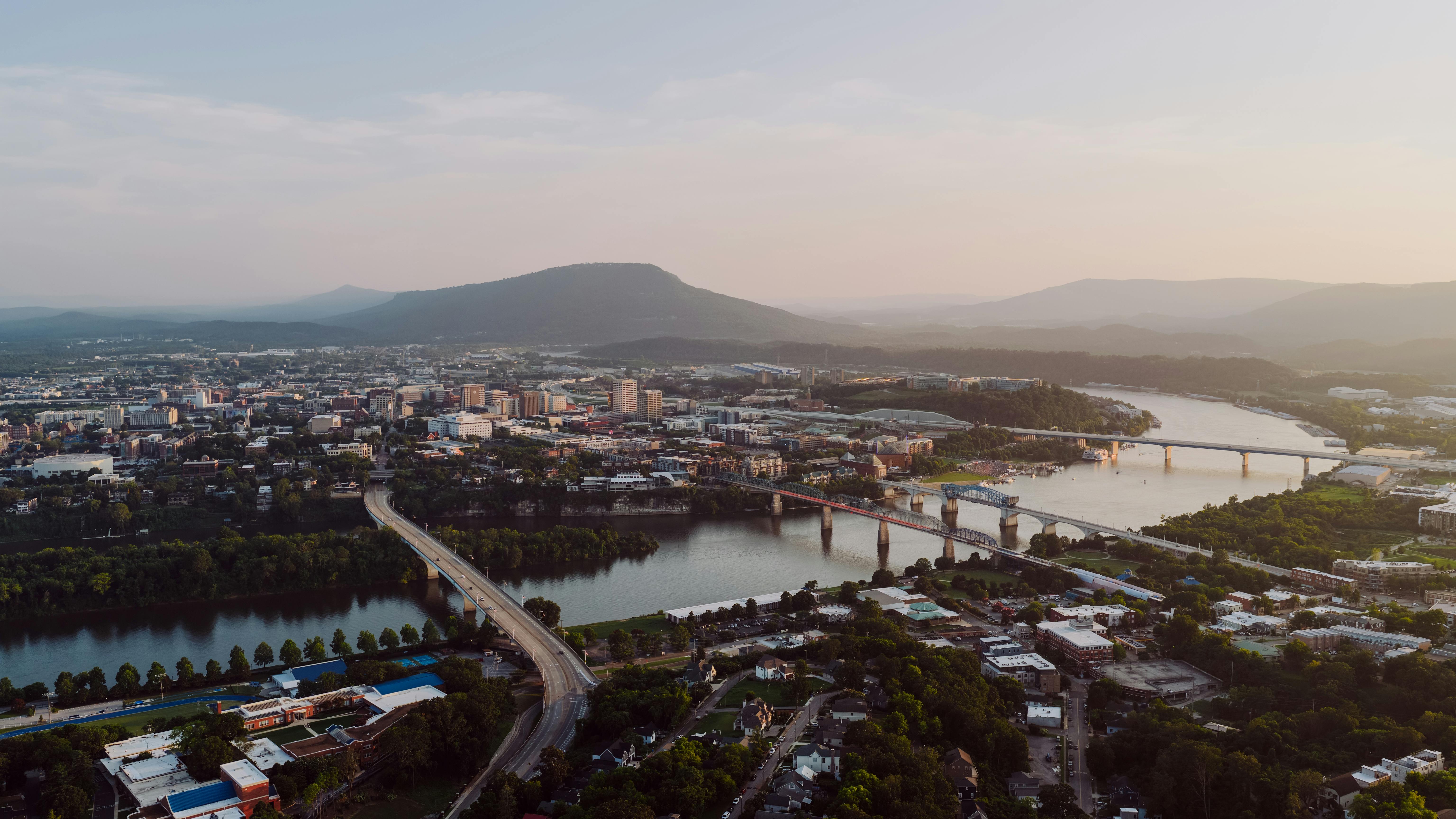
The clearest sign that Chattanooga is no longer a niche stop came on March 12, 2025, when Chattanooga Tourism Co. told Hamilton County officials that the county welcomed 10.7 million visitors and led Tennessee in hotel room sales growth, with a 0.9% year-over-year increase. Tourism supports more than 30,000 local jobs and generates more than $70 million in local tax revenue, according to the organization’s annual report. Local television station WDEF separately reported that Hamilton County generated a record $1.8 billion in visitor spending in 2024, underscoring how large the sector has become for the local economy.
Those figures matter because Chattanooga is not competing on the same scale or image as Tennessee’s biggest tourism engines. Nashville dominates the state’s national brand with music, conventions and celebrity appeal. The Smokies and Gatlinburg benefit from decades of family-vacation familiarity. Chattanooga, by contrast, is still often introduced as a pleasant surprise, a framing that flatters the city but also reveals its challenge: many travelers arrive with low expectations because they did not plan to be impressed.
Tourism officials argue that the city’s appeal lies in its range. In a relatively compact urban core, visitors can move from an aquarium and riverfront to mountain trails, climbing walls, cave systems and historic rail attractions without the sprawl common in larger destinations. That convenience has become a major selling point for families and short-stay travelers looking for high activity with low logistical friction.
Yet the city’s underdog status persists partly because its strongest assets do not always fit a single, easy national stereotype. It is not exclusively a music city, not only a mountain town, not just a food destination and not solely a tech hub. For visitors, that can be a strength. For marketers trying to break through in a crowded travel economy, it can make Chattanooga harder to summarize in one quick phrase.
The outdoors, downtown and riverfront form an unusually tight package
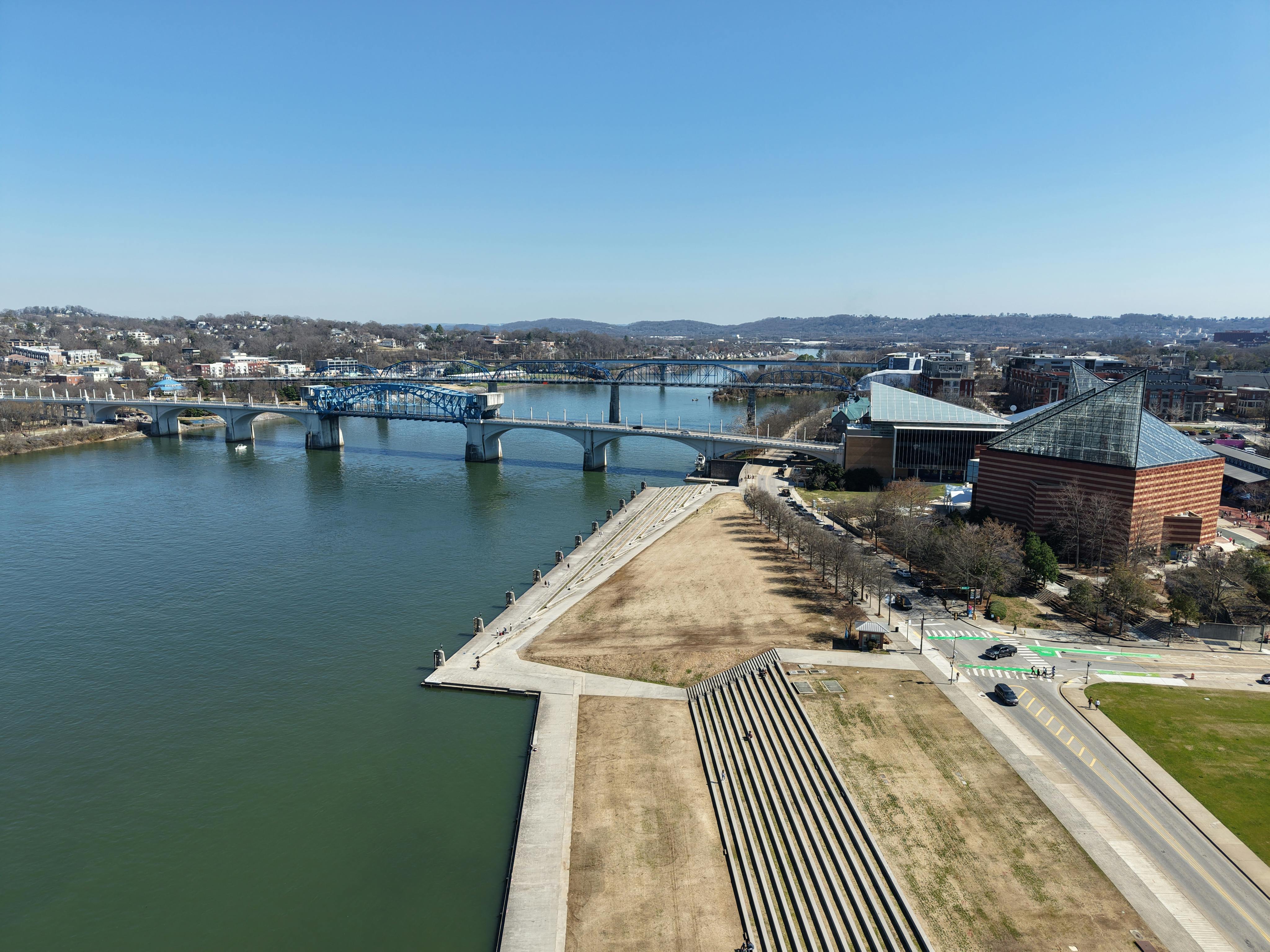
What surprises many first-time visitors is not that Chattanooga has attractions, but how closely they sit together. The Tennessee Aquarium remains one of the city’s signature draws, anchoring a riverfront district that has steadily expanded into a more cohesive public-facing downtown. From there, travelers can reach the Walnut Street Bridge, parks, museums, restaurants and trailheads with unusual ease for a midsized American city.
That geographic compactness helps explain why Chattanooga consistently overperforms with weekend visitors. A short trip can feel full without feeling rushed. Families can spend a morning indoors, an afternoon on the riverfront and an evening in walkable neighborhoods. Outdoor travelers, meanwhile, can use the city as a base camp for hiking, climbing, paddling and cycling rather than treating wilderness access as an hours-long side trip.
The Lookout Mountain area remains central to that formula, even though some of its best-known attractions long predate the city’s current reinvention. Rock City, Ruby Falls and the Incline Railway have given Chattanooga a tourism identity for generations. What has changed is the way those legacy attractions now sit beside newer expectations: craft dining, hotel development, remote-work culture and a downtown that feels more active and polished than many travelers expect.
This blend of old and new has become increasingly valuable in a regional travel market where visitors want both authenticity and convenience. Chattanooga can offer historic postcards and contemporary urban amenities in the same itinerary. That helps the city appeal to multiple age groups at once, from grandparents who recognize the roadside-billboard era of Lookout Mountain to younger travelers who are more interested in cafés, climbing gyms and neighborhood culture.
Still, the very qualities that make Chattanooga satisfying on arrival can also make it easy to overlook from afar. It photographs well but does not always dominate national travel conversation. Its attractions are substantial but not always treated as must-see cultural events. In an attention economy driven by rankings, social media shorthand and blockbuster branding, Chattanooga often lands in the category of discovery rather than default choice.
Gig City status changed the local economy and the city’s image

Long before remote work became common, Chattanooga was already trying to distinguish itself through infrastructure. EPB, the city-owned utility, built the fiber network that helped give Chattanooga the “Gig City” label, and the utility still uses that reputation as a core part of the city’s identity. EPB says Chattanooga became the first U.S. city to offer community-wide 1 gig service in 2010, and the network has since been upgraded further, including community-wide 25 Gig service introduced in 2022.
That digital backbone has had measurable economic effects. A 2025 EPB release citing a peer-reviewed study by the University of Tennessee at Chattanooga said the utility’s fiber network and automated grid generated $5.3 billion in community benefit since launch, supported 10,420 jobs from 2011 through 2024 and produced $84.06 million for schools and public services through payments in lieu of taxes. Mayor Tim Kelly said in the same release that the network helped make Chattanooga “a magnet for tech startups, remote workers, researchers and more.”
The innovation push has expanded beyond broadband. In March 2024, EPB and partners launched the Chattanooga Quantum Collaborative, a nonprofit effort aimed at building a regional quantum-technology ecosystem. The group’s stated 10-year goals include $5 billion in economic benefit and a quantum-ready workforce of 5,000 people. For a city more widely associated with mountain views than advanced research networks, that kind of ambition adds to Chattanooga’s reputation for confounding assumptions.
For travelers, however, the tech story works in a subtler way than a new attraction or festival. It shapes the city’s atmosphere more than its sightseeing checklist. Better connectivity, a larger remote-work population and a visible startup identity have helped support coffee shops, mixed-use districts, downtown foot traffic and a sense that Chattanooga is not merely preserving itself for visitors but actively remaking itself for residents and employers.
That distinction matters. Some leisure destinations feel staged around tourism alone. Chattanooga’s appeal is stronger when visitors sense they are entering a functioning city with local momentum, not a themed district built to entertain outsiders. The same infrastructure that made Chattanooga attractive to entrepreneurs and mobile professionals has also helped make it more livable, and that livability is part of what travelers increasingly notice when they arrive.
Why many Americans still skip it on the way to somewhere else
If Chattanooga’s strengths are so evident once people arrive, the more revealing question is why so many still do not put it at the top of their list. Part of the answer is simple competition. In the Southeast, destination choices come preloaded with powerful associations: Nashville for music, Asheville for Blue Ridge cool, Atlanta for big-city scale, Gatlinburg for mountain family trips, Charleston and Savannah for coastal charm. Chattanooga occupies a less obvious lane.
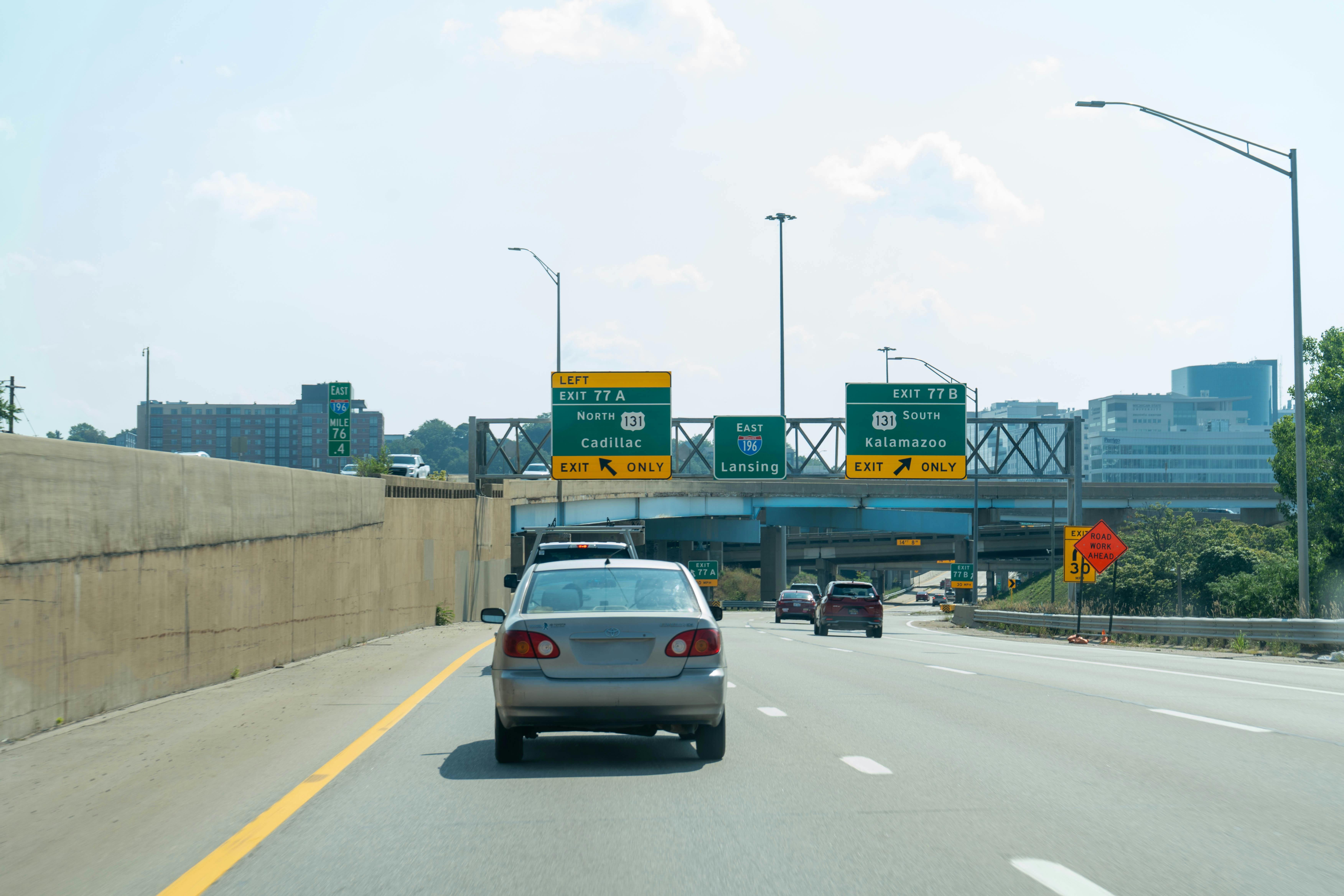
It also suffers from an image lag common to cities that have changed faster than the public narrative around them. For years, Chattanooga was known nationally more as a convenient interstate waypoint than a place to linger. Travelers crossing Tennessee or heading toward Florida, Atlanta or the Smokies may know the name from road signs but not from aspirational vacation planning. When a city’s old identity is functional rather than glamorous, perception can take years to catch up with reality.
Another factor is that Chattanooga’s appeal is cumulative rather than singular. It wins by offering a lot of good things at once: outdoor recreation, family attractions, scenic infrastructure, a manageable downtown, improving hotels and a strong food-and-drink scene. That is persuasive to a traveler comparing actual itineraries. It is less immediately viral than one iconic beach, one major theme park or one globally recognized entertainment district.
The city also faces the paradox of mid-sized success. Its scale is one of its best features, but scale can limit national visibility. Chattanooga is large enough to sustain major amenities and small enough to feel easy, yet not so large that it naturally dominates media coverage or bucket-list culture. In travel marketing, being “just right” often loses to being either world-famous or wildly obscure.
That leaves Chattanooga in an unusual position: strong enough to post record tourism spending, but still dependent on word of mouth and repeat visits to build broader recognition. Surprise has become part of the brand. The problem is that surprise only works on people who decided to stop.
The next phase may depend on turning surprise into intention

Chattanooga’s next challenge is not proving that it has appeal. The data already suggest that visitors are coming in significant numbers and spending heavily once they do. The bigger task is converting a city known for pleasant surprise into one travelers deliberately choose before they leave home.
That may become easier as Tennessee’s tourism economy continues to grow. Axios reported in June 2025 that statewide visitor spending reached a record $31.7 billion in 2024, with 147 million visits overall. In that environment, Chattanooga does not need to become Nashville to advance; it needs to continue claiming a distinct place within a larger, expanding state travel market. Its case is strongest when it presents itself not as an alternative after the big names are booked, but as a different kind of trip altogether.
The city also appears to be building capacity for that push. Chattanooga Tourism Co. said nearly 450 new hotel rooms were expected to open in 2025, a sign that local leaders and developers are betting demand will continue. Lodging growth matters not just as a response to current traffic, but as a statement of confidence that the city can host more overnight visitors, conferences and event-driven travel without losing the compactness that makes it appealing.
What makes Chattanooga’s story notable is that it is not based on hype alone. It is grounded in measurable tourism growth, a nationally unusual broadband legacy, a riverfront downtown that functions well for visitors and residents, and a landscape that gives the city an adventure identity most urban centers would envy. The surprise is real because the assets are real.
For now, though, Chattanooga remains one of those places Americans are often delighted to discover after they arrive rather than determined to see in advance. That tension is exactly what makes it such a compelling travel story. The city has already built much of what travelers say they want. The mystery is why so many still have to be talked into pulling over.