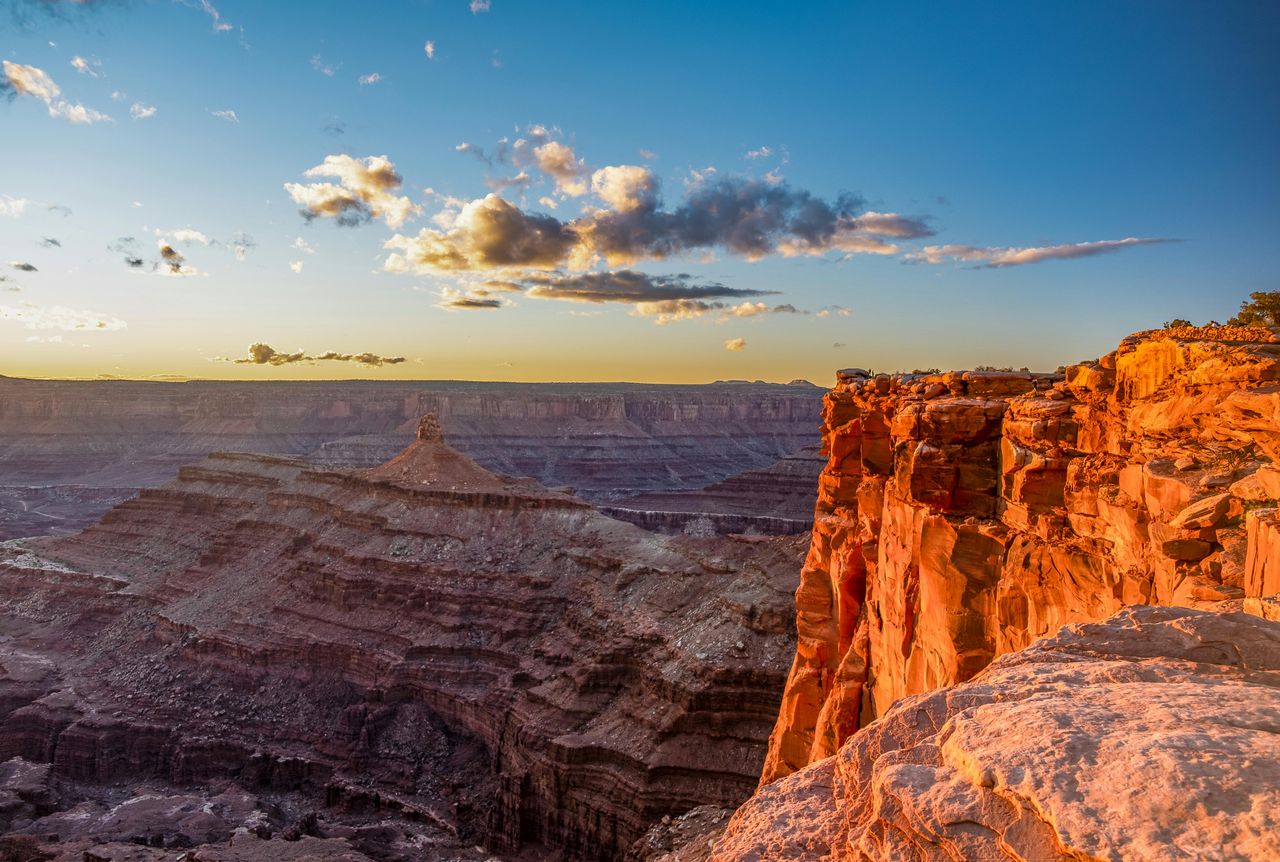
Some towns are scenic. A few are actually useful. The best Southwest base camps do both, giving travelers a place to sleep, eat and reset without wasting half the day in traffic, shuttle lines or long drives to the trailhead.
After staying in each of the towns ranked here, one pattern stood out: the winners are the places where access is immediate, adventure options stack up in every direction, and the town itself can absorb the crowds that come with being a gateway to public land.
1. Moab, Utah, remains the Southwest’s most complete adventure base camp
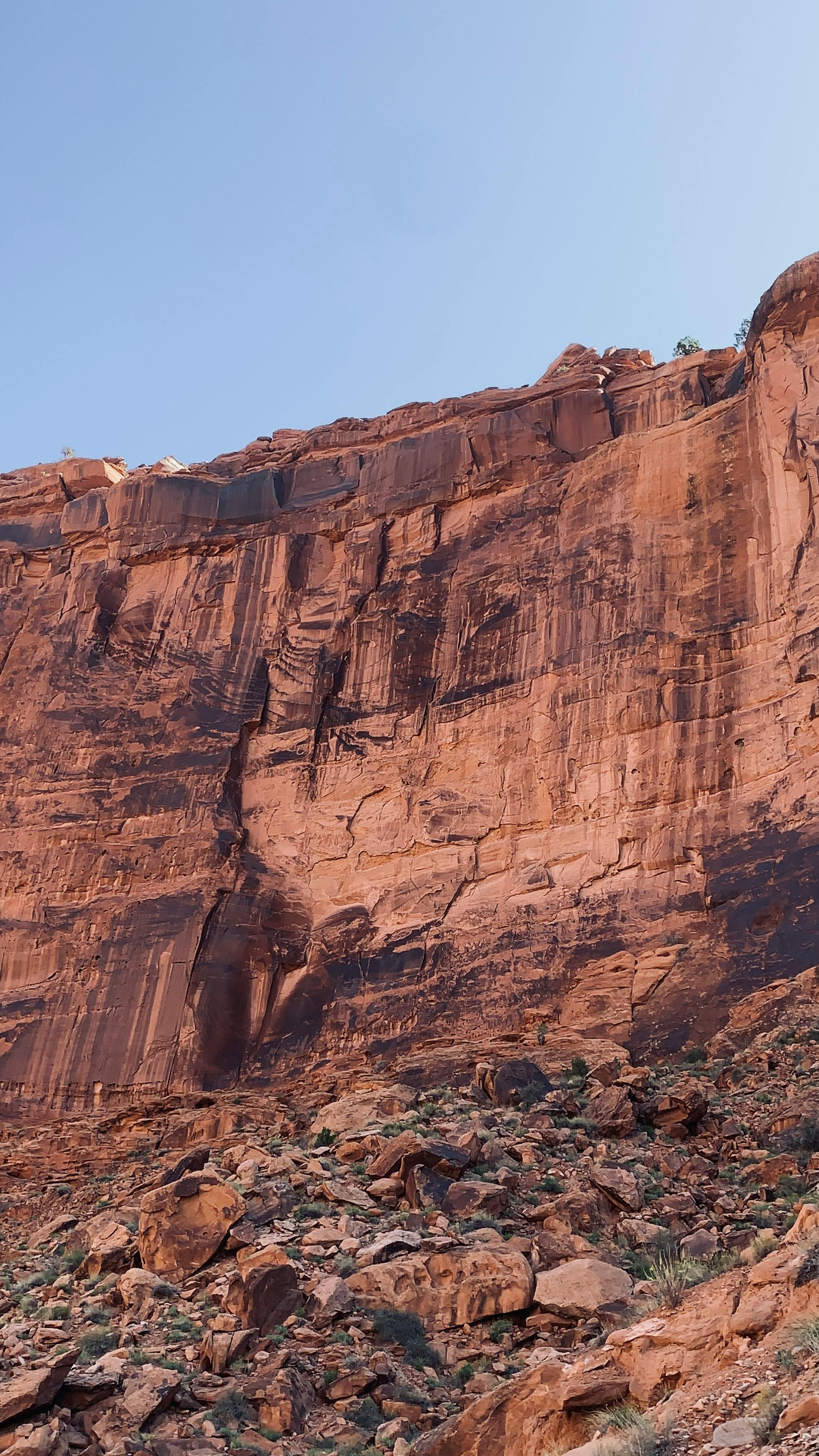
Moab takes the top spot because almost nowhere else in the region packs this much variety into such a small radius. The town sits minutes from Arches National Park and within easy reach of Canyonlands National Park, while the surrounding Bureau of Land Management landscape adds world-class mountain biking, four-wheel-drive routes, climbing walls, river trips and desert hiking. The National Park Service notes that Moab is only about 10 minutes from Arches, a simple fact that matters when early starts and heat management shape the day. Arches also continues to warn of heavy visitation and traffic from spring through fall, underscoring why staying in town is more practical than trying to commute from farther afield.
That proximity turns Moab into a genuine dawn-to-dark base camp rather than a postcard stop. A visitor can ride slickrock in the morning, hike to a sandstone arch in the afternoon and still be back in time for gear shop runs, groceries and dinner. Even in shoulder season, the town functions around outdoor use, with a lodging mix that ranges from basic motels to higher-end stays and campgrounds around the valley. For travelers trying to combine multiple national park units with non-park terrain, that kind of operational flexibility is hard to beat.
Moab’s biggest weakness is also evidence of its strength: it can feel busy nearly all year. National Park Service alerts tied to seasonal traffic, timed-entry policies in recent years, and holiday crowd management all point to sustained demand. But if the definition of a base camp is the place that gives the highest ratio of adventure options to logistical friction, Moab still wins. It is the Southwest town most completely built around getting people out the door and onto rock, trail and river.
2. Flagstaff, Arizona, offers the broadest four-season range
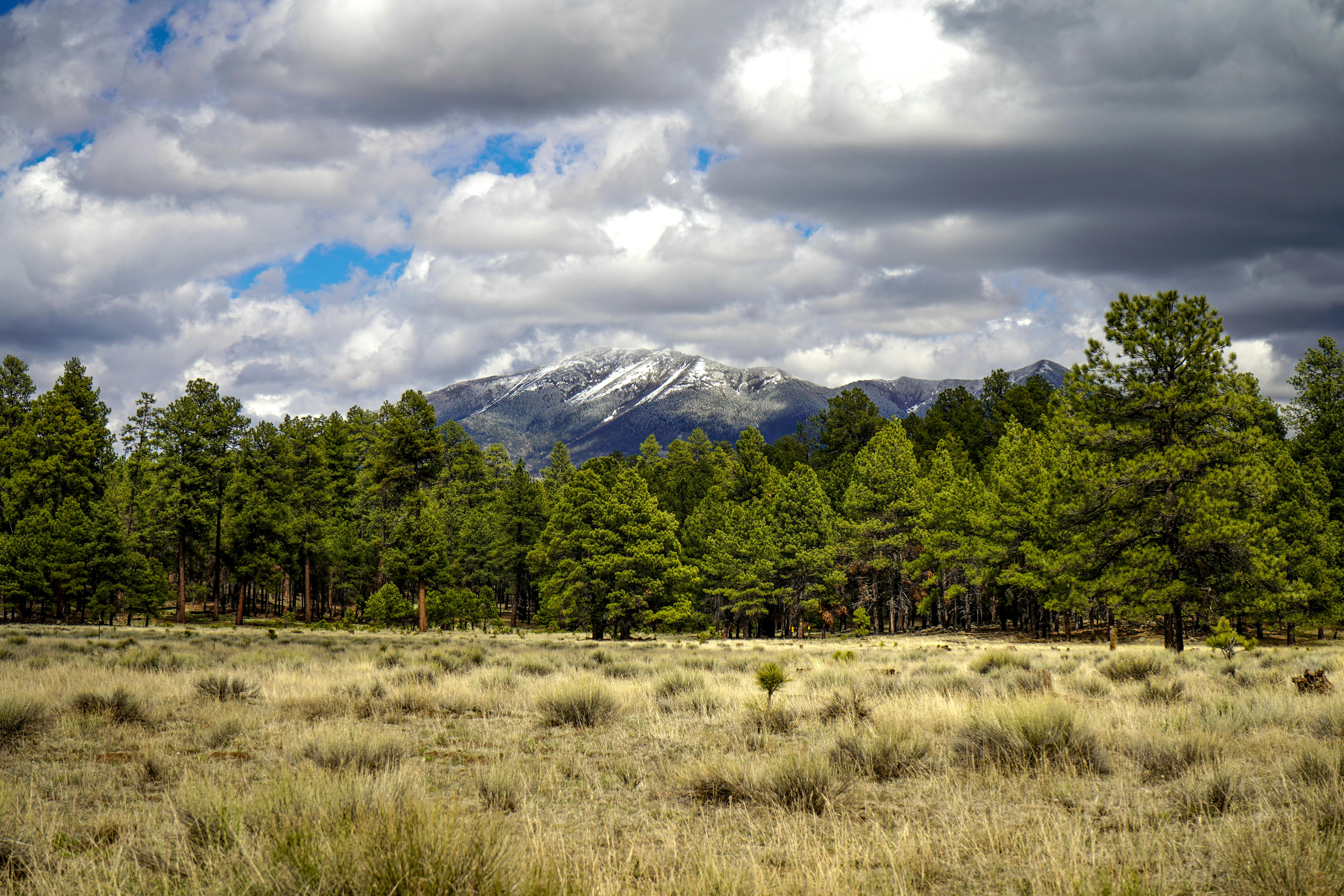
Flagstaff ranks second because it does more things well than almost any other mountain town in the broader Southwest. At 7,000 feet, it gives travelers relief from desert heat and access to terrain that changes dramatically with the season. The city sits near Coconino National Forest, Walnut Canyon, Sunset Crater and Wupatki, while the Grand Canyon’s South Rim is a realistic day trip. On the mountain side, the Coconino National Forest says Arizona Snowbowl operates on the San Francisco Peaks roughly 14 miles north of town, with skiing in winter and scenic rides and hiking access in the warmer months.
That breadth matters for a true base camp. In spring and fall, hikers can split time between pine forest, volcanic landscapes and nearby red rock country. In summer, Flagstaff works as a cooler headquarters for trail running, mountain biking and alpine-style day hikes such as Humphreys Trail, which the Forest Service describes as offering sweeping views across northern Arizona. In winter, the equation shifts again, with downhill skiing, snow play and Nordic options close enough to town to make half-day outings realistic.
Flagstaff also benefits from city-scale infrastructure that many gateway towns lack. There are more hotels, more food options, better road links and more room to spread out than in smaller tourism-dependent communities. That makes it especially strong for travelers mixing outdoor plans with family needs, remote work or longer stays. It loses the top spot only because the marquee adventures are more dispersed than in Moab, where the concentration is tighter and the handoff from motel parking lot to trailhead is even faster. Still, for people who want a versatile Southwest headquarters that works in nearly any month, Flagstaff is hard to top.
3. Springdale, Utah, is the most efficient Zion launch point
Springdale lands third because no town on this list is so clearly fused to a single major park experience. Zion National Park’s most visited canyon sits next to Springdale, according to the National Park Service, and the town’s transportation system is effectively part of the access plan. The park says visitors can use free shuttles in Zion Canyon and Springdale during shuttle season, while the Town of Springdale says its shuttle stops at nine locations and connects directly to the pedestrian entrance. For travelers trying to avoid full parking lots and a stressful morning scramble, that setup is a major advantage.
In practical terms, Springdale works because it strips away avoidable friction. You can leave the car parked, walk to breakfast, board a shuttle and start hiking without re-entering the highway loop. That is unusually valuable in a park where trailheads for headline hikes such as the Narrows and Angels Landing draw intense demand. Zion’s 2026 shuttle schedule, announced by the park in February, continued the long-running system that was created to reduce traffic and protect canyon resources. The result is a town that functions less like a separate community and more like the front porch to one of the country’s busiest national parks.
The tradeoff is scope. Springdale is superb for Zion, but it is not as broad an all-around base camp as Moab or Flagstaff. Lodging is generally pricier, the valley can feel compressed when visitation spikes, and the outdoor menu is more canyon-centric than multi-sport. Even so, for travelers whose priority is maximizing time in Zion rather than sampling the wider region, Springdale belongs near the top. It is one of the Southwest’s best examples of a town whose entire layout has evolved around getting visitors into extraordinary terrain as smoothly as possible.
4. Sedona, Arizona, pairs easy trail access with a polished town base
Sedona comes in fourth because the outdoor access is exceptional even if the town can feel more resort-forward than dirtbag-functional. The U.S. Forest Service says the Sedona Red Rock Ranger District trail system includes about 400 miles of trails, supporting hiking, backpacking, horseback riding, mountain biking and seasonal motorized use. The City of Sedona also highlights an integrated trails, hiking and biking network, evidence of how closely the community’s identity is tied to nearby public land. That means visitors do not need to drive far to find rewarding terrain; in many cases, the red rock experience begins almost immediately.
For many travelers, that convenience is the selling point. Sedona is especially strong for shorter stays, mixed-ability groups and visitors who want big scenery without committing to epic logistics. A morning can begin on a classic route near Bell Rock or Cathedral Rock, roll into a bike ride or jeep tour, and end with a comfortable dinner back in town. The Bell Rock Pathway, one of the district’s busiest access corridors, shows how the area is managed for sustained demand, with Red Rock Pass parking and heavy use baked into the planning.
Sedona ranks below Springdale because the crowding and pricing can blunt its effectiveness as a pure base camp. Parking pressure, road congestion and a tourism economy weighted toward wellness and luxury can make it feel less streamlined for serious multi-day adventuring. But the town still performs at a high level for travelers who care about balancing outdoor access with comfort, dining and a polished place to come back to each night. It may not have Moab’s raw utility, yet it remains one of the Southwest’s most attractive and practical hubs for hiking and riding among iconic desert landscapes.
5. St. George, Utah, wins on range, weather and room to breathe
St. George rounds out the top five because it quietly solves problems that more famous gateway towns often create. It lacks the single-brand star power of Moab or Sedona, but it offers a broader metro-style base with quick access to a surprising spread of terrain. From town, travelers can reach Zion’s broader region, Snow Canyon State Park, desert riding zones, reservoir paddling and golf-season shoulder weather that keeps the area active for much of the year. Southern Utah’s transportation links also make St. George one of the easier places in the region to use as a hub for a longer trip rather than a one-park stop.
Its advantage is breathing room. Compared with tighter canyon towns, St. George generally offers more chain lodging, more services, more road capacity and an easier rhythm for families or travelers carrying a lot of gear. That matters when a trip includes bikes, boats, kids or a weather backup plan. It is also useful for visitors who want a base camp that still feels functional after the hiking day ends, rather than a village that effectively shuts down around one main attraction.
The reason St. George finishes fifth instead of higher is that its best adventures are less concentrated right on the doorstep. You trade the immediacy of Springdale or Sedona for scale and flexibility. Even so, that trade can be smart. For travelers who want to sample several corners of southwest Utah without paying top dollar to stay inside a narrower gateway corridor, St. George remains one of the strongest practical choices in the Southwest. It may be the least glamorous pick in the ranking, but as a place to actually organize a multi-day outdoor trip, it consistently overdelivers.
What separates a good adventure town from a great one
The ranking here was built around a simple question: once the car is parked and the bags are down, how easy is it to keep adventuring? On that measure, Moab leads because it compresses national parks, BLM land, river access and bike terrain into one highly efficient package. Flagstaff follows for its unmatched four-season versatility, while Springdale earns a high finish because it is the cleanest logistical answer to Zion’s popularity. Sedona and St. George round out the list by excelling in different ways, one through immediate scenic access and the other through regional flexibility.
There are, of course, other contenders. Towns like Durango, Bishop and Las Vegas all have strong cases depending on whether the priority is alpine access, climbing culture or a huge lodging base near desert terrain. But this ranking favors towns in the Southwest that repeatedly make it easiest to wake up, step outside and actually do the thing. In a region where adventure often competes with traffic, heat, permit systems and parking chaos, that distinction matters more than branding.
The larger takeaway is that gateway towns are no longer just support acts for nearby parks. They shape trip quality in real time through shuttle systems, trail connectivity, room supply, pricing and how well they absorb visitor pressure. Federal agencies and local governments have increasingly built those systems to manage crowding and resource protection, from Zion’s shuttles to Sedona’s trail management and Arches’ recurring traffic warnings. For travelers, the best base camp town is not simply the prettiest one. It is the place that turns ambition into a realistic day outside, again and again.
Why the Southwest base-camp race matters more now
The competition among Southwest base camp towns is becoming more important as public-land travel grows more crowded, more seasonal and more logistics-heavy. Park managers across the region now regularly warn of full parking lots, congestion and heat-related safety issues, meaning the choice of town can directly shape what visitors are able to do. Staying 10 minutes from a park gate instead of 60 is no longer just a convenience. In peak periods, it can determine whether a hike happens at all.
That shift is also changing what travelers value. A base camp used to mean inexpensive lodging near good scenery. Increasingly, it means transit links, shoulder-season utility, food and grocery options, trail density, cell service, gear support and backup plans when weather or crowds force changes. Towns like Springdale have leaned into shuttle-connected access. Flagstaff benefits from larger-city infrastructure. Moab continues to dominate because it still lets visitors pivot quickly among parks, trails and river corridors without losing the day to transit.
For local economies, the stakes are significant. Outdoor recreation remains a major draw for lodging tax revenue, guiding businesses, retailers and restaurants across Utah and Arizona. But the towns that thrive will be the ones that can handle demand without sacrificing the qualities that made them desirable in the first place. That makes this ranking about more than personal preference. It is also a snapshot of how the Southwest’s best adventure towns are adapting to a new era in which access, not just scenery, is the deciding factor for travelers planning the next trip.